Ultima IV: Quest of the Avatar
DOS - 1987
Also released on: Amiga - Apple II - Atari 8-bit - Atari ST - Commodore 64 - FM Towns - FM-7 - MSX - PC-88 - PC-98 - SEGA Master System - Sharp X68000
| Alt names | Ultima 4: Quest of the Avatar, Ultima IV: Avatar no Tankyu, Ultima IV: C64, Ultima: Quest of the Avatar, Ultima: Seisha e no Michi, Última IV, ウルティマ -聖者への道-, ウルティマIV |
|---|---|
| Year | 1987 |
| Platform | DOS |
| Released in | United States (1987) United Kingdom (1988) Germany (2010) |
| Genre | Role-Playing (RPG) |
| Theme | Fantasy, Puzzle elements, Turn-based |
| Publisher | MicroProse Software, Inc., ORIGIN Systems, Inc. |
| Developer | ORIGIN Systems, Inc. |
| Perspectives | 1st-Person, Top-Down |
Description of Ultima IV: Quest of the Avatar
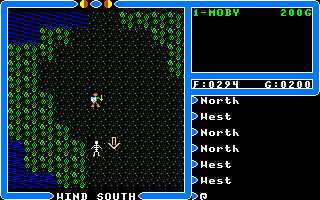
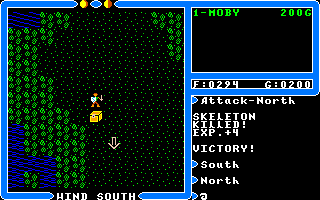
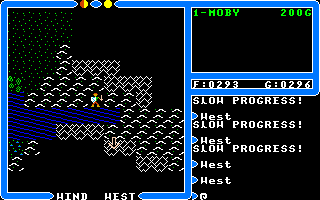
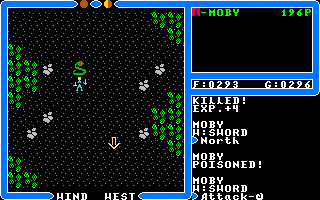
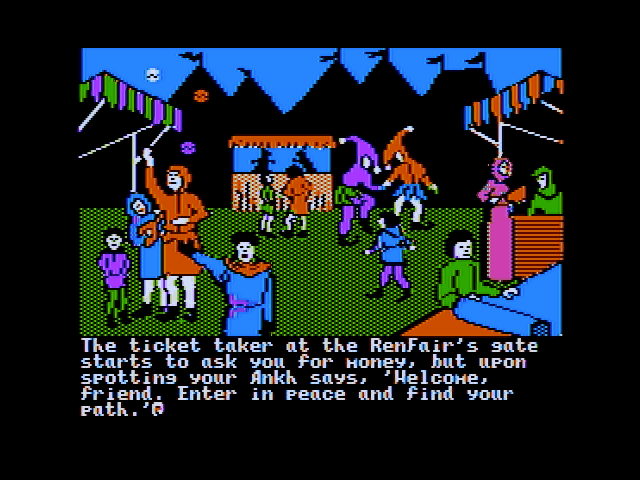
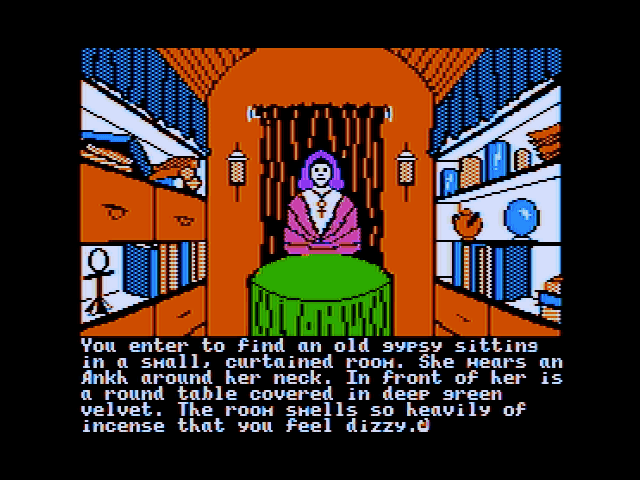
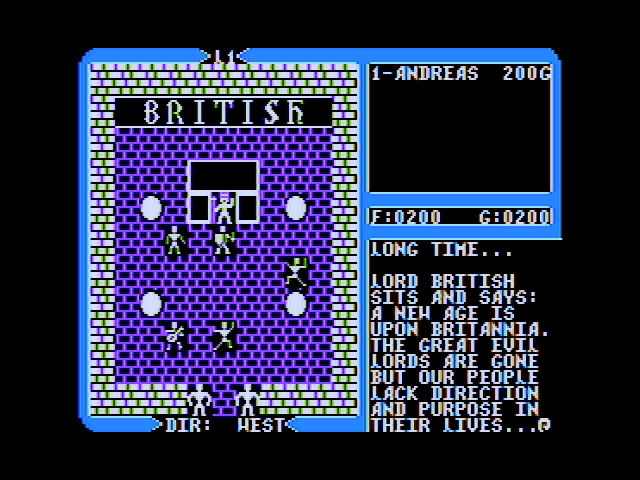
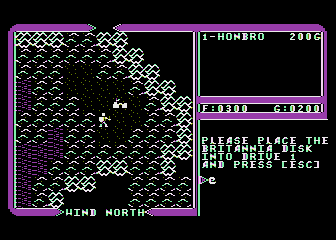
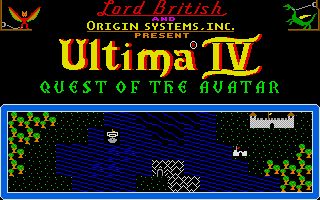
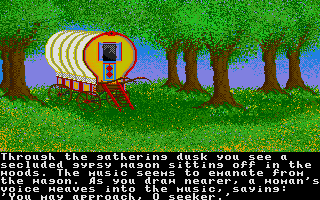
Long hailed as one of the best RPGs ever created, Richard Garriott's revolutionary classic Ultima IV: Quest of The Avatar gets a great facelift with this excellent VGA graphics and MIDI patch by Joshua Steele, a die-hard fan of the series.
From the official site, the patch "...[upgrades] Ultima IV to 256 color graphics with MIDI support. The patch replaces the tileset, font, game, and cutscene graphics, as well as correcting several conversation bugs within the original .TLK files. Adds command keys to Reload the last saved game and Exit to the OS." In other words, it adds enough pizzazz to lure the faithful back to Britannia ;)
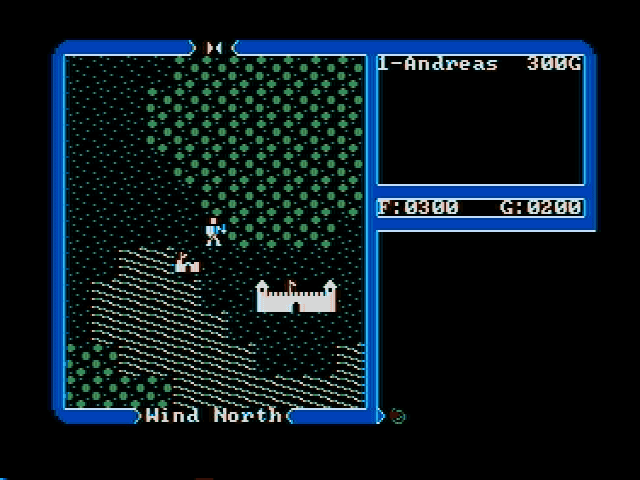
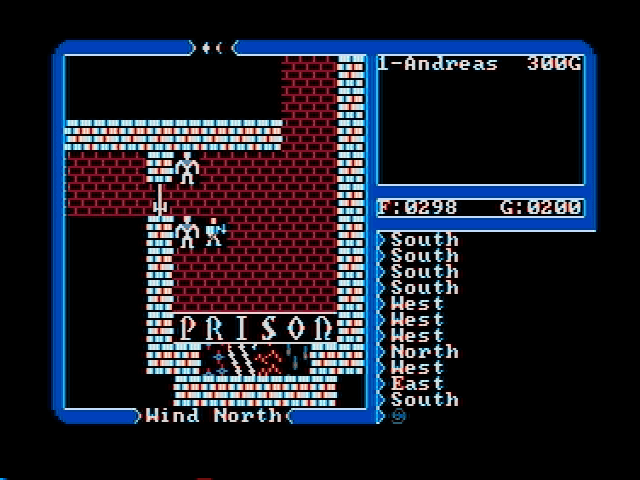
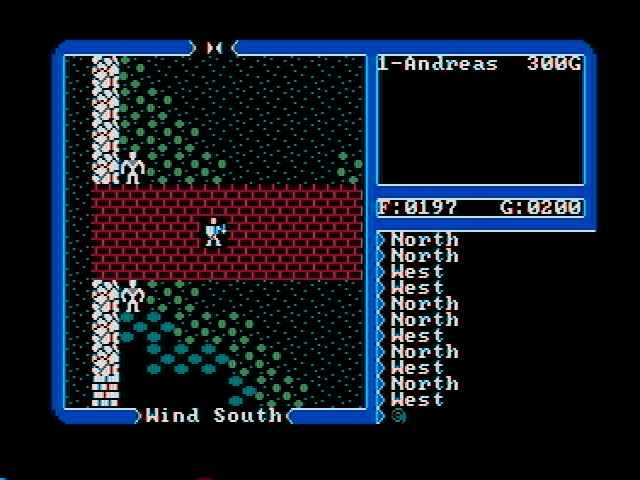
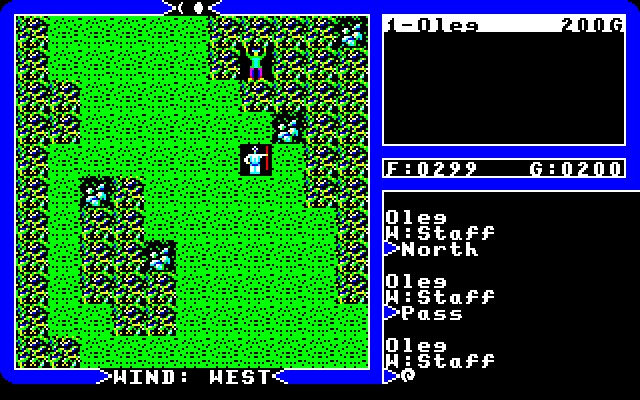
Die-hard fans can stop reading this review now and download the file below (be sure to read the Technical Notes first, though). If you are a newbie who has never played the game before, then read on for my review. My most favorite game in the Ultima series, the fourth game in the saga features a greatly improved version of Ultima III engine, with color graphics and better character interaction (for the first time, you can now have actual conversations with NPCs).
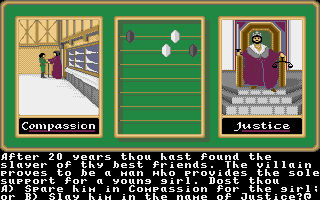
But what really makes Ultima IV revolutionary is its radical departure from any other RPG made before- or since. Instead of building up your character by accumulating combat experience in order to face the big evil foozle, your goal in Ultima IV is to become the Avatar, a spiritual leader for the people of Britannia. This meant upholding the "eight virtues," and basically trying to become a better person. This means, for the first time, that you will do good deeds simply because it is a "right thing to do" rather than to get some physical reward in return.
The game world is deep enough that various activities, such as tipping beggars or allowing wounded monsters to run away, would increase the virtues (compassion in this example). On the other hand, ignoble behavior that are typical in most other RPGs, such as backstabbing fleeing monsters or picking up things that don't belong to you, will decrease the corresponding virtues. More or less all your actions are evaluated in terms of virtue, and it is this "morality check" that makes the game so intriguing.
In addition to this very original and intriguing approach to gameplay, Ultima IV still has plenty of traditional RPG elements. There are many dungeons to explore, monsters to kill, and even a "Holy Grail" final objective that requires you to find the Codex of Ultimate Wisdom to complete your transformation into Avatarhood. Of course, you need to have done enough good deeds in all eight virtues to finish the game.
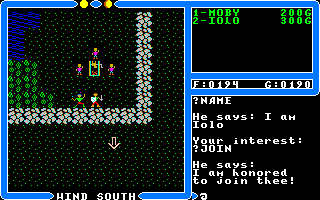
Ultima IV was also the first game in the series that allows NPCs to join your party: it introduces the mythical Iolo the Bard, Dupre the Paladin, and Shamino the Ranger-characters that will feature prominently in later games. With numerous innovations, intriguing gameplay, and a great story, Ultima IV remains one of few RPGs that truly deserves to be called "timeless." With ideas that are still fresh even today, it is arguably the best representation of the true Ultima spirit... one that has sadly been lost after Ultima VII.
A classic in every sense of the word-and three cheers to Joshua Steele who makes gamers' return to Britannia all the more worthwhile. If you are interested in knowing how Lord British came up with the idea of the eight virtues, be sure to read CD Mag's interview in the Related Links section below.
Review By HOTUD
External links
Captures and Snapshots



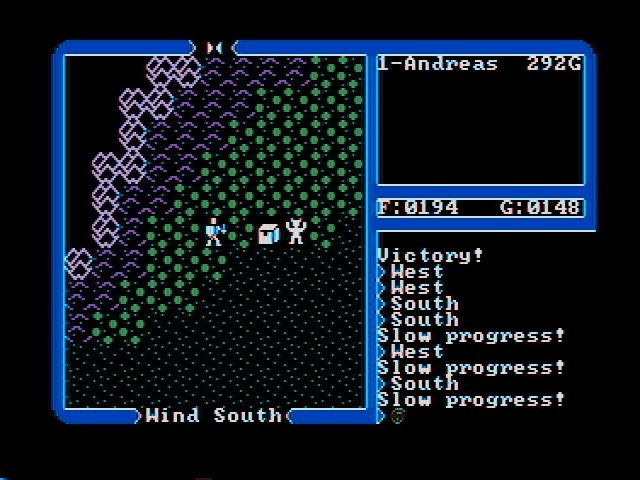


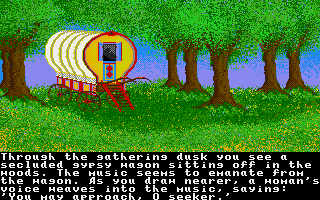
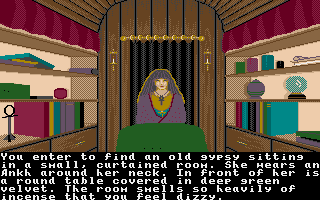
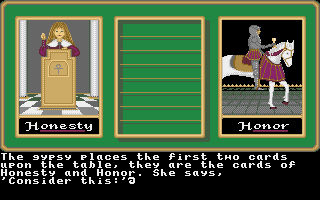














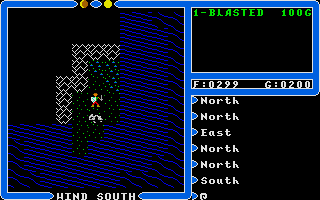


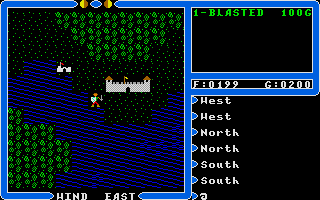


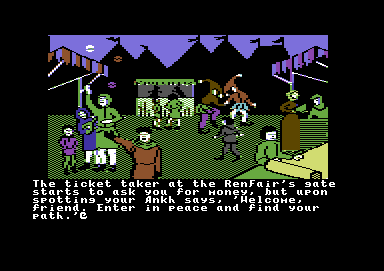
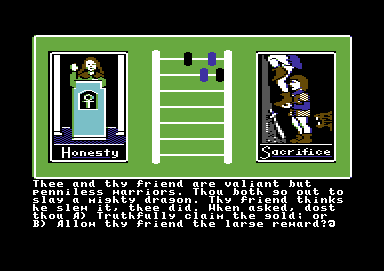



















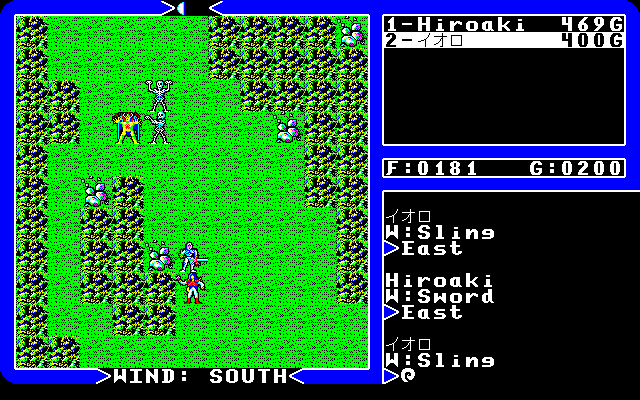

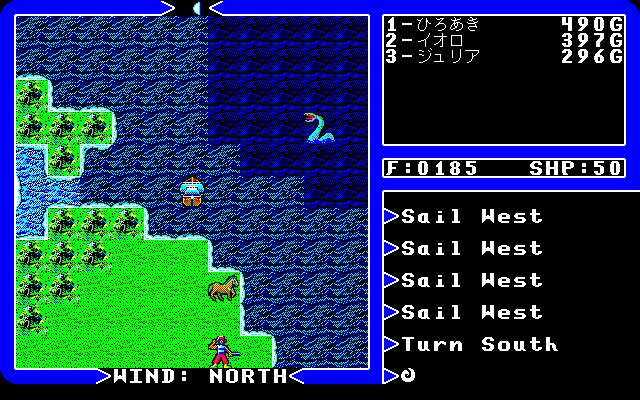



Comments and reviews
BWYUH 2023-09-25 0 point DOS version
I'm surprised you have to buy it. I got it for free in 1997 on a game magazine disk called PCGames.exe. It was their July/August disk. (I still have it) Technically GOG shouldn't be able to sell it since it was a legal giveaway long before GOG ever existed.
Valoupae 2022-04-11 2 points Apple II version
Truly amazing game in its day. Still fun now but the interwebs kinda screwed the pooch. If your a first timer, no way you do good with the 9th virtue of "InternetCheatSheetyNess". I remember buying game magazines to look for potential hints for this game. I filled an entire notebook with notes and past conversations w NPC's. Wish i woulda saved that original cloth map too.
Kyle 2018-05-03 2 points
The NES version was the best one in my opinion. Unlike the others, you don't have to fight in the abyss all alone.
Tibor 2018-04-06 0 point Commodore 64 version
All I get in the C64 version is the "E.C.A Proudly Presents" starting page...and that's it.
ULTIMAte Commodore 2017-08-06 1 point
Great game! For those on Windows PCs, grab XU4, which is a free VGA remake of this game. It is the full Ultima 4 with great MIDI music support and other upgrades.
Grab XU4 and U4UPGRAD.ZIP. Put the U4UPGRAD.ZIP file in the main XU4 directory, and *DO NOT* unzip it. XU4 will handle the ZIP as needed.
Jam_Pony_Express 2016-06-10 1 point
The only version that seems to have an executable is the DOS version. Try starting the DOS version with D Fend and I get message "No party formed" and the program quits. Any suggestions??
Seannachie 2015-10-15 1 point
Someone actually ported this to MegaZeux.
http://vault.digitalmzx.net/show.php?id=1711
wolfenz 2015-06-25 0 point DOS version
Well Said Itoo.. One of my Favorite as a Kid my first Ultima was III I love the Soundtrack ( Music ) in Ultima III but even More in Ultima IV I remember playing many Long nights with this game when i was a Kid first Computer was a Commodore 128 but I mostly Used it C 64 Mode with fast load .. The Music was incredible on the Commodore 64 Version.. and it true Doing good Deeds and Virtues in the Game was the Best and it Booted your Character ... a Big Sand Box World // with a Occasion of the Disk Drive access pause. :) I Bought Ultima 5 buit it was great but it was kinda difficult ..
Julius Caesar 2014-03-10 0 point DOS version
Awsome game! :D A game that changed rpg gaming dramatically (sorry if i spelled that wrong O_o
indstr 2014-02-08 0 point DOS version
Very cool, I used to play this as a kid... I never got very far, but it was fun nonetheless.
Statsman1 2013-05-15 2 points DOS version
The BEST Ultima game ever! Set the standard for everything else that followed it!!
Itoo 2012-02-24 7 points DOS version
This game trains your moral character in a unique way you will never experience elsewhere. I started playing it 24 years ago.
The object of this game is to train a hero, the Avatar, by learning and demonstrating mastery of eight virtuous character traits: compassion, courage, honesty, humility, spirituality, sacrifice, honor and justice. You accomplish this by talking to inhabitants, meditating at shrines, and how you act. For instance, pay the blind less than her asking price for her wares and you lose the virtue of honesty. Escape a fight (walking off the screen ends the battle) and lose the virtue of justice. Donate blood at the doctor to boost sacrifice or give alms to the poor for compassion.
Meanwhile there's an overall grand finale ritual that you go around collecting all the pieces for while you become the avatar.
The coolest thing is that if you beat this game, Richard Garriott, the writer, enjoys being notified of your accomplishment. He's on Facebook (just look for the first 2nd generation astronaut - yeah!)
This game isn't going to appeal to many people because of the dated graphics, and kids are most likely going to groan. I was put on it at age 6 but didn't actually complete the game until a replay on my NES version in my early twenties. That was when I could finally sit through completing it. Also, the NES version just plays better.
I really wish this game were remade for todays gamers (XBOX or Itunes apps.) I would love to pass on what it taught me to my children, too, if I could only speak in their medium. I've YET to find another game that comes close to what this game instills within you: a sense of morality not based on any sort of customary ethics, and a duty to be the best example you personally can. I still use and prefer its ethical system in my daily life today over all other religious and/or philosophic methods I've come in contact with.
Write a comment
Share your gamer memories, give useful links or comment anything you'd like. This game is no longer abandonware, we won't put it back online.
Get Ultima IV: Quest of the Avatar
Ultima IV: Quest of the Avatar is available for a small price on the following websites, and is no longer abandonware. GOG.com provides the best release and does not include DRM, please buy from them! You can read our online store guide.
Game Extras and Resources
Some of these file may not be included in the game stores. For Ultima IV: Quest of the Avatar, we have the following files:
 126 KB (Amiga)
Other Releases
Ultima IV: Quest of the Avatar was also released on the following systems:
Amiga
- Year: 1988
- Publisher: MicroProse Software, Inc., ORIGIN Systems, Inc.
- Developer: ORIGIN Systems, Inc.
Apple II
- Year: 1985
- Publisher: ORIGIN Systems, Inc.
- Developer: ORIGIN Systems, Inc.
Atari 8-bit
- Year: 1986
- Publisher: ORIGIN Systems, Inc.
- Developer: ORIGIN Systems, Inc.
Atari ST
- Year: 1987
- Publisher: MicroProse Software, Inc., ORIGIN Systems, Inc.
- Developer: ORIGIN Systems, Inc.
Commodore 64
- Year: 1985
- Publisher: MicroProse Software, Inc., ORIGIN Systems, Inc., U.S. Gold Ltd.
- Developer: ORIGIN Systems, Inc.
FM Towns
- Year: 1992
- Publisher: Fujitsu Limited
- Developer: ORIGIN Systems, Inc.
FM-7
- Year: 1987
- Publisher: Pony Canyon, Inc.
- Developer: ORIGIN Systems, Inc.
MSX
- Year: 1987
- Publisher: Pony Canyon, Inc.
- Developer: ORIGIN Systems, Inc.
PC-88
- Year: 1987
- Publisher: Pony Canyon, Inc.
- Developer: ORIGIN Systems, Inc.
PC-98
- Year: 1987
- Publisher: Pony Canyon, Inc.
- Developer: ORIGIN Systems, Inc.
SEGA Master System
- Year: 1990
- Publisher: SEGA Enterprises Ltd., Tec Toy Indústria de Brinquedos S.A.
- Developer: ORIGIN Systems, Inc.
Sharp X68000
- Year: 1988
- Publisher: Pony Canyon, Inc.
- Developer: ORIGIN Systems, Inc.
Similar games
Fellow retro gamers also downloaded these games: